Showing posts with label silly stuff. Show all posts

Tuesday, March 29, 2011

the ass-backwards rules

1) If the project starts ass-backwards, it will continue ass-backwards regardless what you do. In the eventual publication all the figures will be presented ass-backwards, with the ones done last coming first.

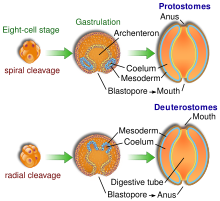
2) The reason why we, humans, can not help but start projects ass-backwards is because we are deuterostomes: we are simply made that way (see below).


Fig. 1. Deuterostomes vs protostomes. Credit: wikipedia

Thursday, February 3, 2011

Jet-lagged? it is in your blood


ResearchBlogging.org


We, animals, have inbuilt metronomes with roughly 24 hour oscillation period, called circadian clocks. These clocks allow organisms to be in sync with the day / night cycle.

And it turnes out that human red blood cells have a circadian clock of their own! And it keeps on ticking when the blood is outside the body!

Peroxiredoxins comprise a conserved family of antioxidant proteins, and researchers checked for peroxiredoxin SO2/3 oxidation level in human red blood cell samples over a period of time. Amazingly, it oscillated with ∼24 hour period! What makes it particularly interesting is that human red blood cells have no nucleus, therefore no new mRNA can be produced. This means that the cycle is not transcription-driven.

There are several interesting peculiarities of this cycle.

First - it is temperature-sensitive! So... when you have a fever, do your red blood cells speed up their cycle and you get jet-lagged?!

Second - experiments reported in the paper are made using bulk of blood cells rather than on the single cell level. Observed oscillations suggest that cells are somehow synchronized. How? Is it something in the blood? Can we influence this synchronization? Can we re-set the clock?

All this calls for one simple experiment. Take a blood sample in Europe and fly it to the US and check how is it doing there. Is it jet-lagged? Can it adjust?

References:

O'Neill JS, & Reddy AB (2011). Circadian clocks in human red blood cells. Nature, 469 (7331), 498-503 PMID: 21270888
Thursday, January 13, 2011

human vs yeast

I am reading loads of yeast genetics papers recently, and I wonder... Imagine yeast getting sapient, and starting doing science. Genetics, in particular. On humans, actually.

For instance they could do some screens for temperature-sensitive mutants (huge, massive saunas in action). Imagine the figures in the papers to go along with this sort of experiments. Some allele crossing experiments in search of synthetic lethality - that would be great as well. With photos of F0 and F1. Auxotrophic humans with plasmids complementing their deficiency as useful tools - complementation experiments will be particularly cruel - no complementation - well, tough luck!

I am really glad yeast are rather silly and not very proactive.

Friday, January 7, 2011

GppCp (GMPPCP) Jena Bioscience NU-402-25 / NU-402-5

GTPases can be inhibited by non-hydrolizable GTP analogues, such as GDPNP or GDPCP, and these are commercially avaliable. So here is my question:

Does it count as a citation if you get cited in the product description leaflet? I guess it does not... but can I get a discount, please?

See ref 1 here.

Thursday, December 30, 2010

catastrophic drop in ribosomal research in 1910

Just found this: http://ngrams.googlelabs.com/

This seems to be a great way to waste a lot of time.


Look at curious spike of interest to tRNA and ribosomes around 1900... this surely means something important. Let us zoom in:


Trends for tRNA and ribosome coincide, so it can not be just a glitch, there should have been some serious research done on translation around the turn on the century... But why did they stop? May be they failed to discover some important components and thus research dwindled?


mRNA? Nah, seems like mRNA was very much a big thing then! How about RelA? Yes! This is it. Now we know - failure to advance translational research around 1900 was caused by failure to discover RelA. Case closed.

Thursday, December 9, 2010

Papers, titles, exclamation marks

Using exclamation marks in scientific papers is a controversial issue. Some people do use them in titles, some - don't. It is down to the keyboard layout you are using, really. Well, if exclamation marks are kosher, then how about this:


A new paper from Yusupov: "OMG! OMG! Yeast 70S ribosome at 2.5 A resolution, WOW!" the real WOW of the discovery that it is actually 70, but not 80S! Only x-ray could determine that. And only at 2.5 A, OMG!


And this  - "Bacterial ribosomal recycling is accomplished by concerted action of EF-G and RRF, LOL!" This one is from Rodnina.


Or imagine a letter to editor. Say, Science. "Arsenic-based life - WTF!?" Well, WTF indeed.

That was all for today.